Bajirru! there you all are, hello! From the Yanyuwa language of Balarinji’s origin community Borroloola NT
Jinangu awara wabarrangu barra kalu-wingka marnijinju wabudala kari-nguthundawabarrangu jinangu Australia li-wulu marnaji barra liyi-Yanyuwawu awara li-Marranbala li-Arrwangala li-Gudanji jinangu awara Burrulula marnaji yamulhu
Our Country we belong to is Borroloola. Yanyuwa, Marra, Gudanji and Garrawa people.We welcome everyone to this land Australia.
Yanyuwa elder Samuel Evans Jamika
Play sound
Stop play sound
Loading...
Aboriginal and Torres Strait Islander people. are respectfully advised this website contains references, artworks and images of people who have passed

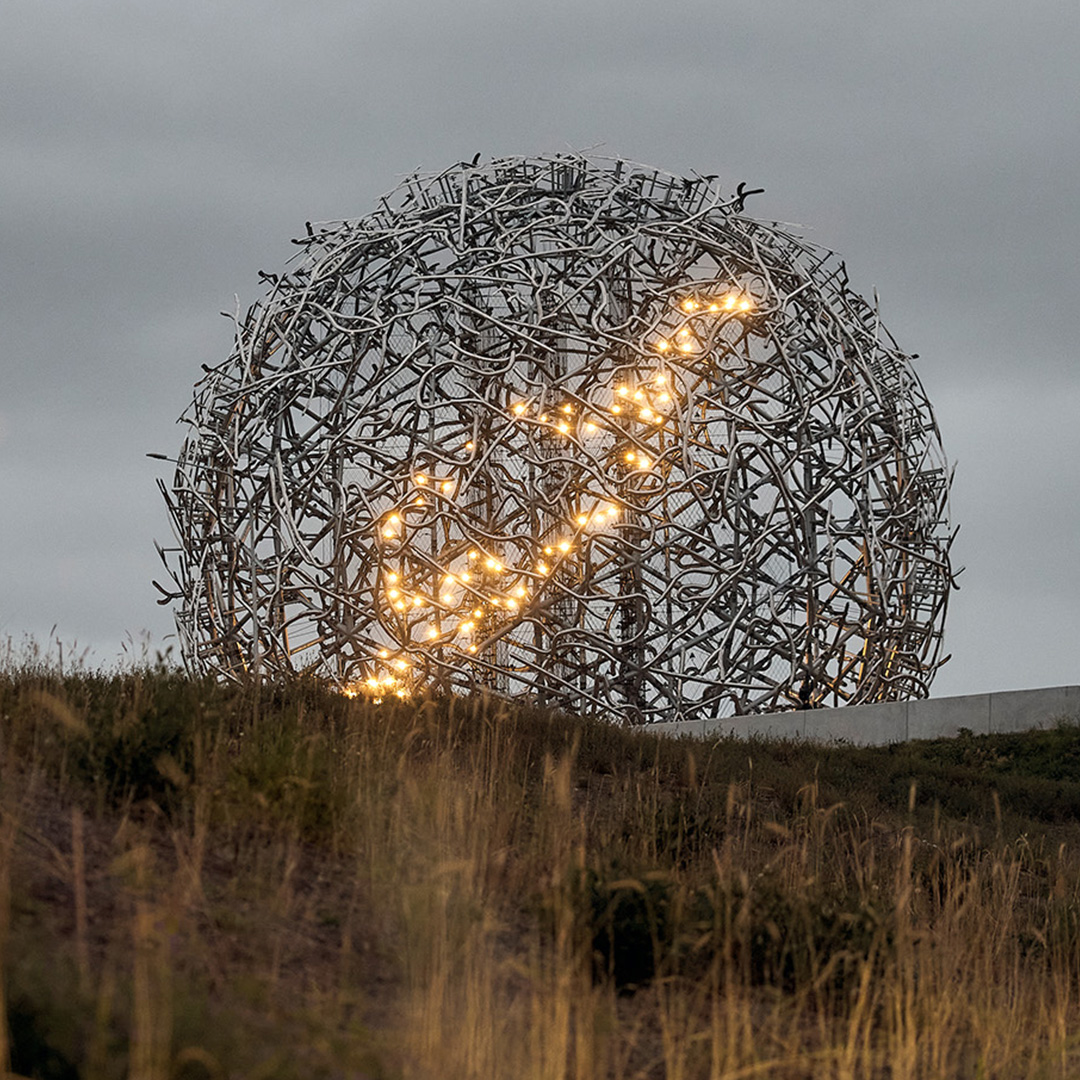
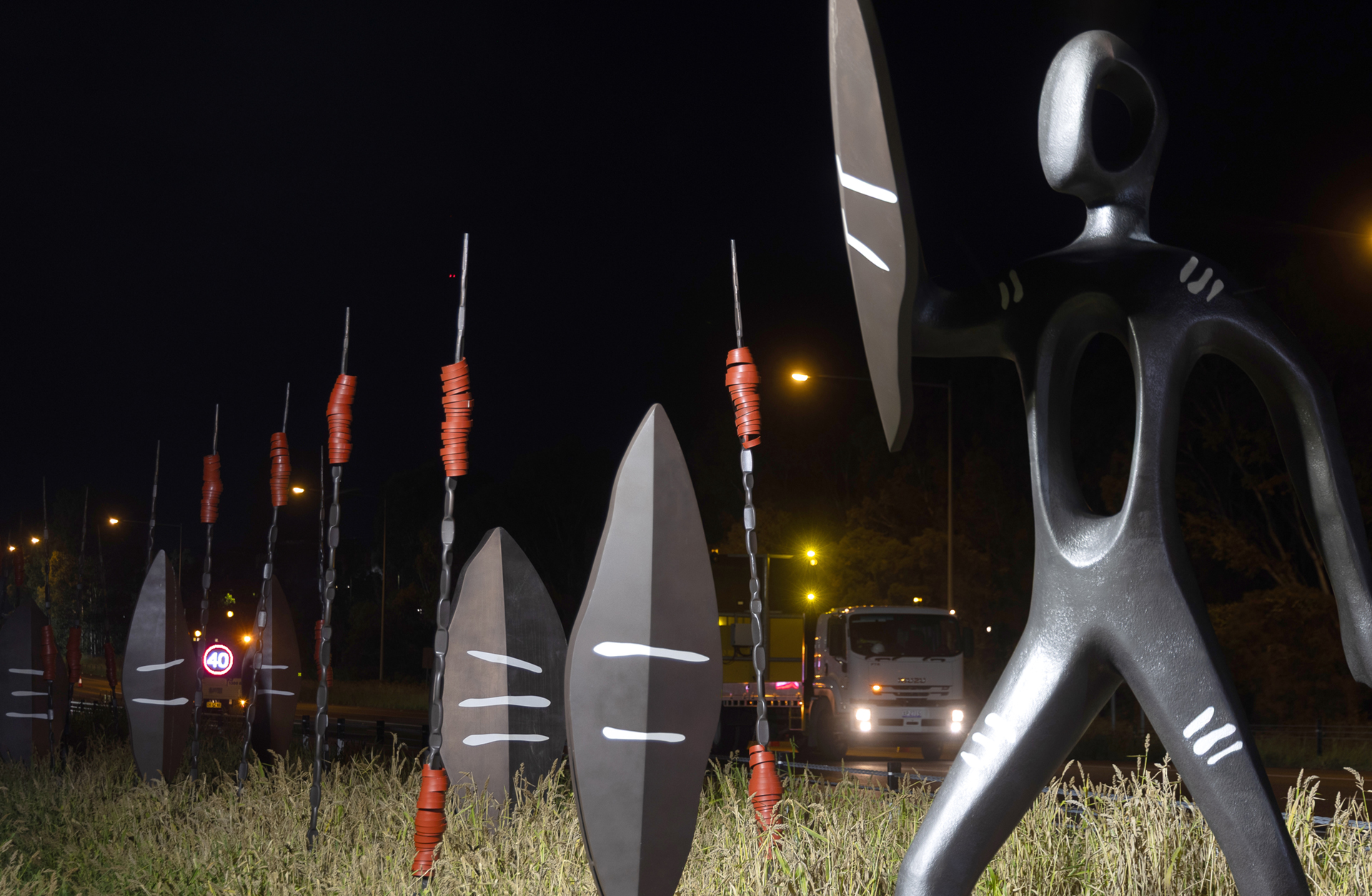
New Aboriginal Public Art Collection unveiled on the M7 Motorway

The narrative interwoven into the collection reflects:

Frontier Wars 

The Art Collection narrative begins with the Frontier Wars fought by Aboriginal and Torres Strait Islander peoples to hold and care for traditional Country. 

Interconnection

Next, the narrative honours Dharug matriarch Maria Lock, whose family fought in the Frontier Wars, her marriage to convict Robert Lock and their nine surviving children, from whom many Dharug people descend. Maria’s descendents fought in the World Wars and today they continue to uphold and enrich Dharug culture.

Together at war

These works acknowledge the furnace of World Wars where Indigenous and non-Indigenous soldiers fought together in a relationship of equality to protect Australia. 

Service and reconciliation

Finally, this story recognises how the spirit in which positive relationships were forged in war gives us hope for a reconciled, entwined future for Australia.

Featured in the collection are new Indigenous artworks at the Light Horse Interchange.

The existing Colin Polworth work (2007) tells the story of horses left behind when servicemen returned. The new Indigenous artworks, co-created by Jasmine Seymour (Dharug) and Balarinji Studio, tell the story of Aboriginal and Torres Strait Islander service in connection with the Light Horse. Positioned on either side of the interchange stand 20 two metre high horses and eight 2.5 metre tall stainless steel emu plumes.

These sculptural horses pay tribute to the Aboriginal and Torres Strait Islander soldiers who took horses to battlefields and recognises Aboriginal and Torres Strait Islander horsemanship skills honed in Australia’s emerging pastoral industry of the early 1900s. While the emu plumes reference Colin Polwarth’s existing work and represent the significance of the emu to Aboriginal ceremony and Country, as well as the commonality and mateship of the iconic slouch hat.

“The built environment has rarely successfully represented deep Aboriginal and Torres Strait Islander storytelling at this scale, with multi-audience appeal, inspiring public curiosity.

This collection uses a new curatorial paradigm for Aboriginal public art. This is not the ubiquitous ‘select and commission’ approach, rather it is underpinned by Balarini’s leading edge Designing with Country engagement methodology with locally-connected Aboriginal knowledge and language holders, military veterans and Dharug-connected artists.

To have this collection of works so deeply connected to local Dharug voices and storytelling is extremely powerful. Thousands of people will experience it every day, acknowledging the living presence of Dharug culture in Western Sydney and inviting us all as Australians to celebrate our rich Aboriginal heritage.”

Ros Moriarty, Balarinji Co-Founder and Managing Director