Bajirru! there you all are, hello! From the Yanyuwa language of Balarinji’s origin community Borroloola NT
Jinangu awara wabarrangu barra kalu-wingka marnijinju wabudala kari-nguthundawabarrangu jinangu Australia li-wulu marnaji barra liyi-Yanyuwawu awara li-Marranbala li-Arrwangala li-Gudanji jinangu awara Burrulula marnaji yamulhu
Our Country we belong to is Borroloola. Yanyuwa, Marra, Gudanji and Garrawa people.We welcome everyone to this land Australia.
Yanyuwa elder Samuel Evans Jamika
Play sound
Stop play sound
Loading...
Aboriginal and Torres Strait Islander people. are respectfully advised this website contains references, artworks and images of people who have passed
Transport for NSW

M12 Motorway Aboriginal Public Art Collection

Themes and stories

The storytelling throughout the M12 acknowledges the area’s rich Aboriginal and cultural heritage and the strength of today's local Aboriginal community. The themes are drawn from Balarinji's Designing with Country framework, created in co-design with locally-connected Aboriginal knowledge holders.

Interconnectedness

The overarching design theme of the M12 corridor is ‘interconnectedness’, reflecting the central Aboriginal principle of physical and spiritual belonging to Country. This grounding places People, Culture and Country in relationship with one another and extends across time, the natural world, technology and travel.

Great Emu in the Sky 

A key narrative throughout the M12 corridor is the Dharug story of the Great Emu in the Sky, which tells how Mariong, the Emu and Mother, became the Milky Way. The Emu Dreaming story is significant to the Dharug and is also shared by Aboriginal peoples across Australia, reinforcing cultural interconnectedness.

Aboriginal Six Seasons

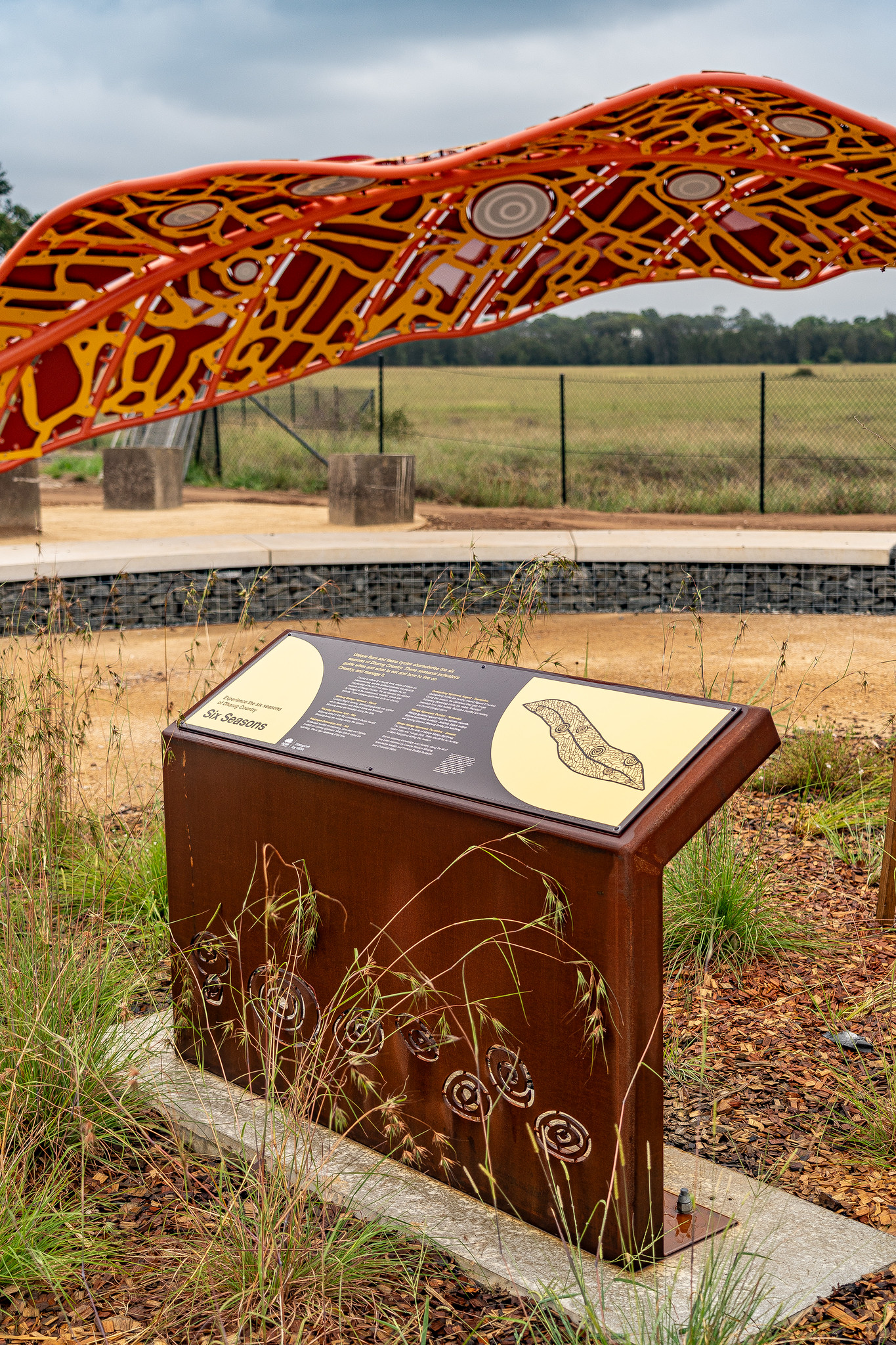
For thousands of years, Aboriginal peoples have used seasonal indicators to guide movement, food gathering and care for Country. Through public art, wayfinding, colour and planting, travellers experience the Aboriginal six seasons of Western Sdyney and the seasonal rhythms of the landscape, encouraging a sense of being on Country.

Seasonal native planting

The M12 corridor celebrates the unique flora and fauna cycles that characterise the Aboriginal six seasons of Western Sydney. Seasonal planting along with educational signage, features at each rest node, along the shared path and is also integrated into The Great Emu in the Sky sculpture. The seasonal planting encourages travellers to experience and connect with Country. 

Language

Local language is a significant theme. In Aboriginal culture, language is closely linked to caring for Country. By speaking language on Country, you awaken Country and its spirituality. The use of language within the M12 corridor supports positive emotional and mental wellbeing.

Connection to Country

The connection to Country theme of the M12 corridor explores the importance that landscape plays within Aboriginal culture and the Dharug community’s ability to read the nuances of the land. 

Public Art Components

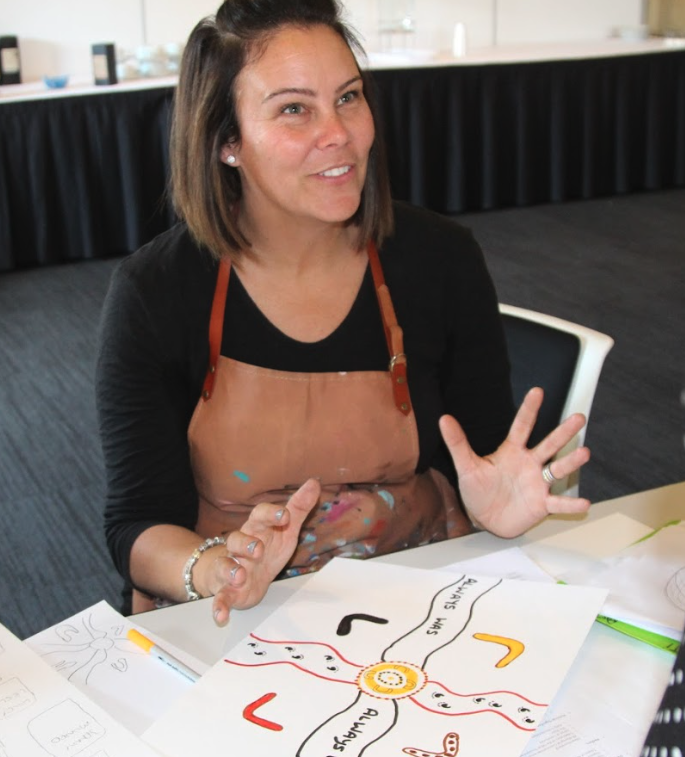
Curated and co-created by Balarinji Studio with a cohort of locally-connected Aboriginal artists, the public art along the M12 corridor invites travellers to engage with Country from multiple viewpoints.

Adjacent to the motorway is a shared path with six rest nodes. Sculptural artworks, interactive wayfinding and interpretive elements respond to different seasons and times of day, creating changing shadows, patterns and perspectives as people move through the landscape.

'The Great Emu in the Sky' Sculpture

Co-created by Aboriginal artists: Danny Eastwood, Jamie Eastwood, Danielle Mate, Jasmine Seymour, Leanne Watson and Balarinji Studio, and was conceived by Balarinji Studio’s lead artist on the work’s genesis, Tim Moriarty.

Located at the Western Sydney Airport interchange, The Great Emu in the Sky is a 30-metre-high sculptural landmark depicting the Great Emu constellation. The sculpture tells the Dharug story of how Mariong became the Milky Way and acts as a Welcome to Dharug Country.

Like the Great Emu constellation which changes throughout the Aboriginal six seasons, the sculpture uses dynamic lighting to reveal  two emu forms, each only visible from certain viewpoints; the one sitting on the nest and one in the night sky. The Aboriginal Six Seasons of Western Sydney are represented by projected colour washes that reflect the current season.

The sculpture refers to the Aboriginal principle of custodianship and knowledge sharing; you only see what you are meant to see and once knowledge holders share their stories with those who respectfully receive the information, it becomes obvious.

The sculpture that houses the illuminated emu forms is made up of mirrored signature branches and represents an emu nest. The branches refer to specific features of the Western Sydney landscape – creeks, ridge lines, silcrete.

The sculpture is visible from a number of viewpoints for motorists, pedestrians and cyclists, Metro passengers, and even travellers on flights approaching and departing from the Western Sydney International Airport.

Overbridge Artworks

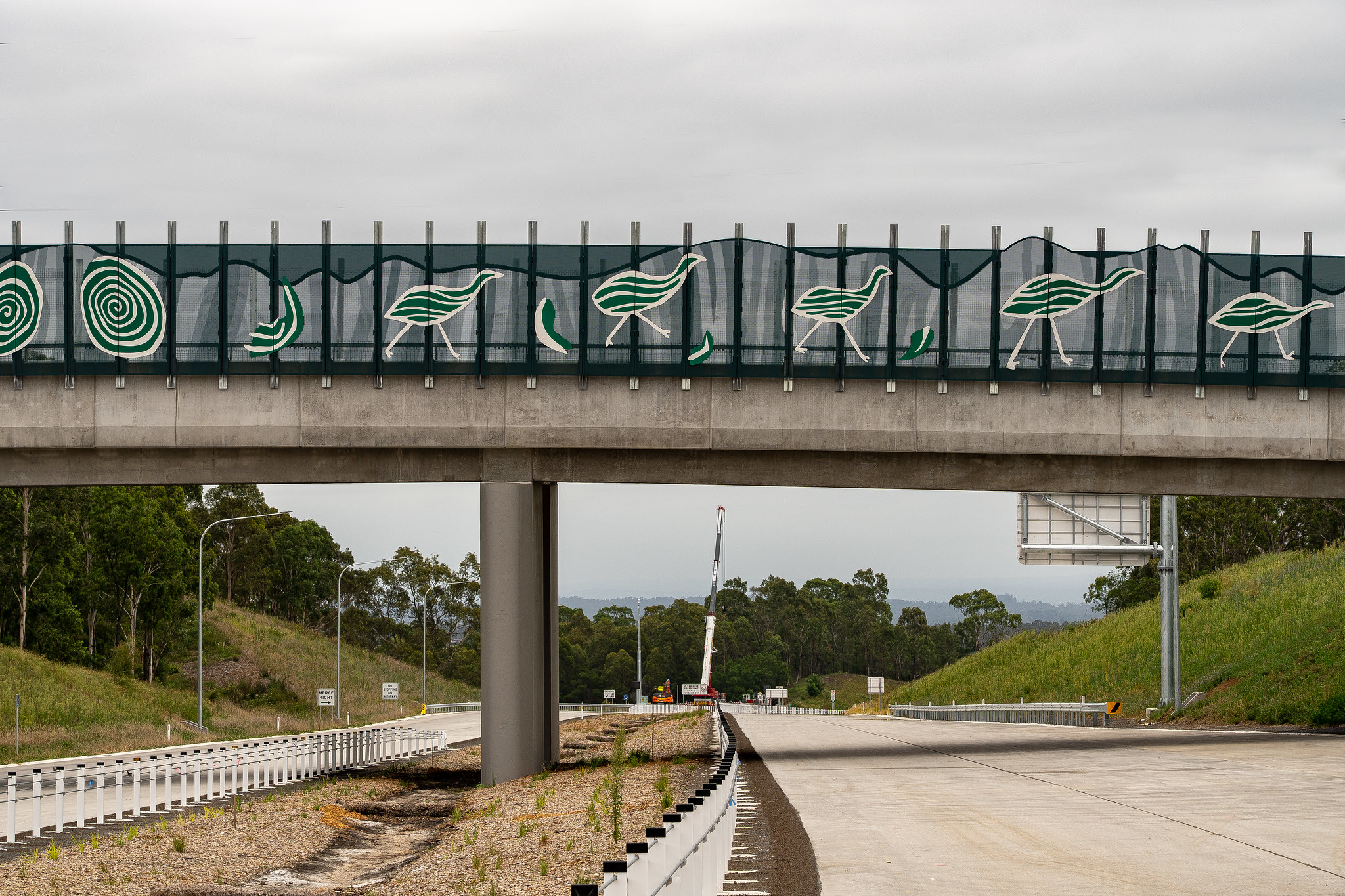
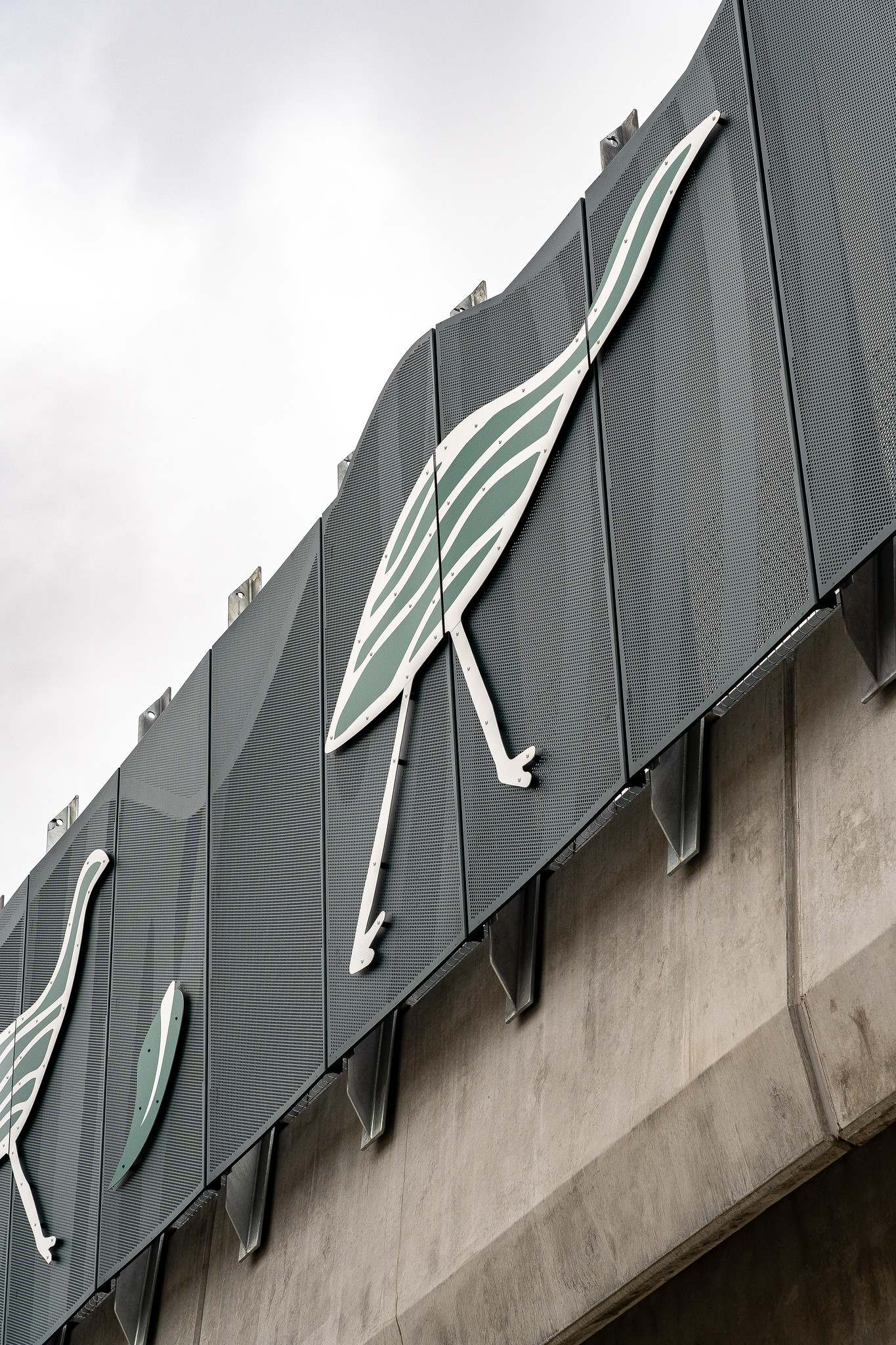
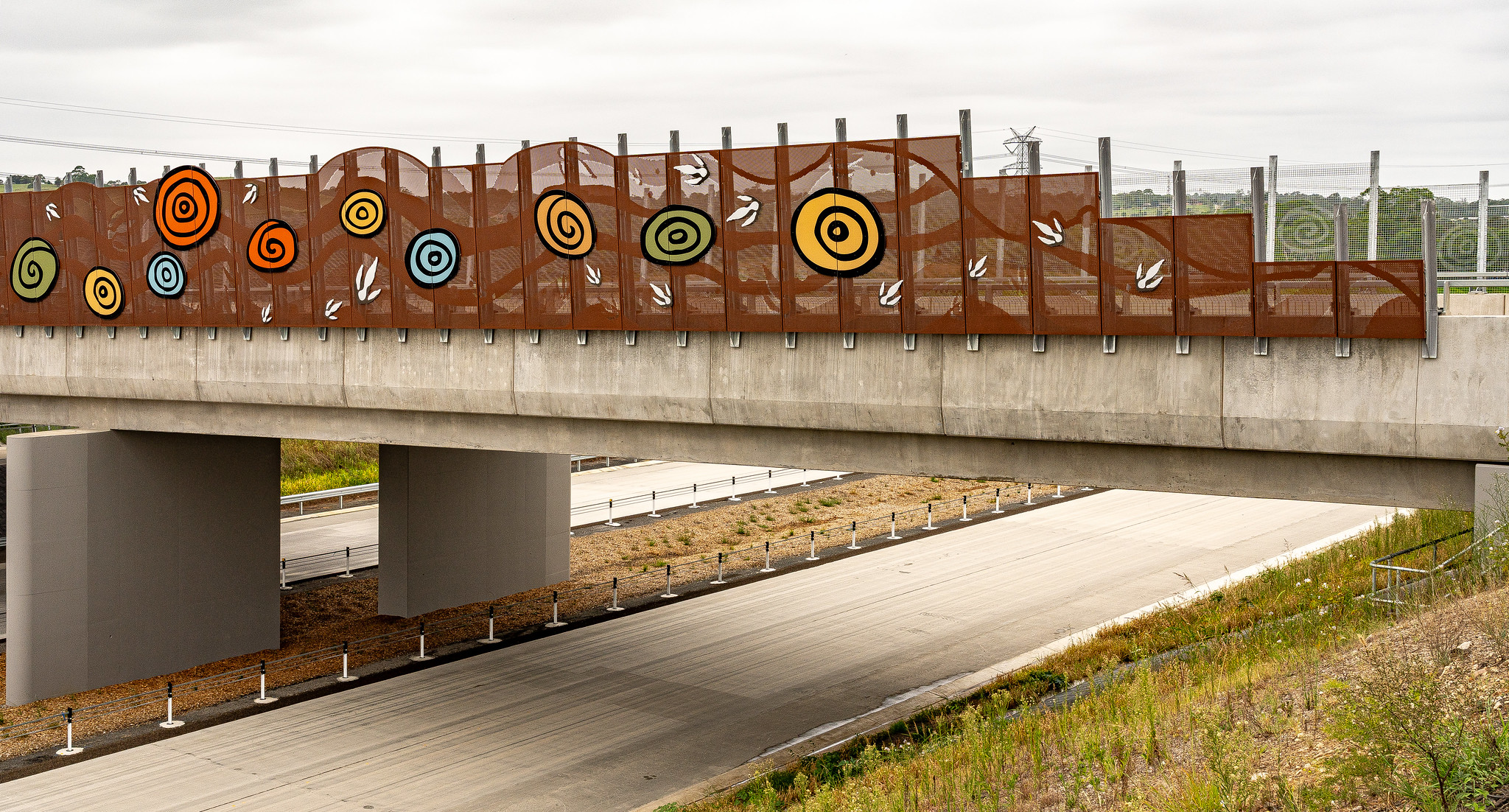
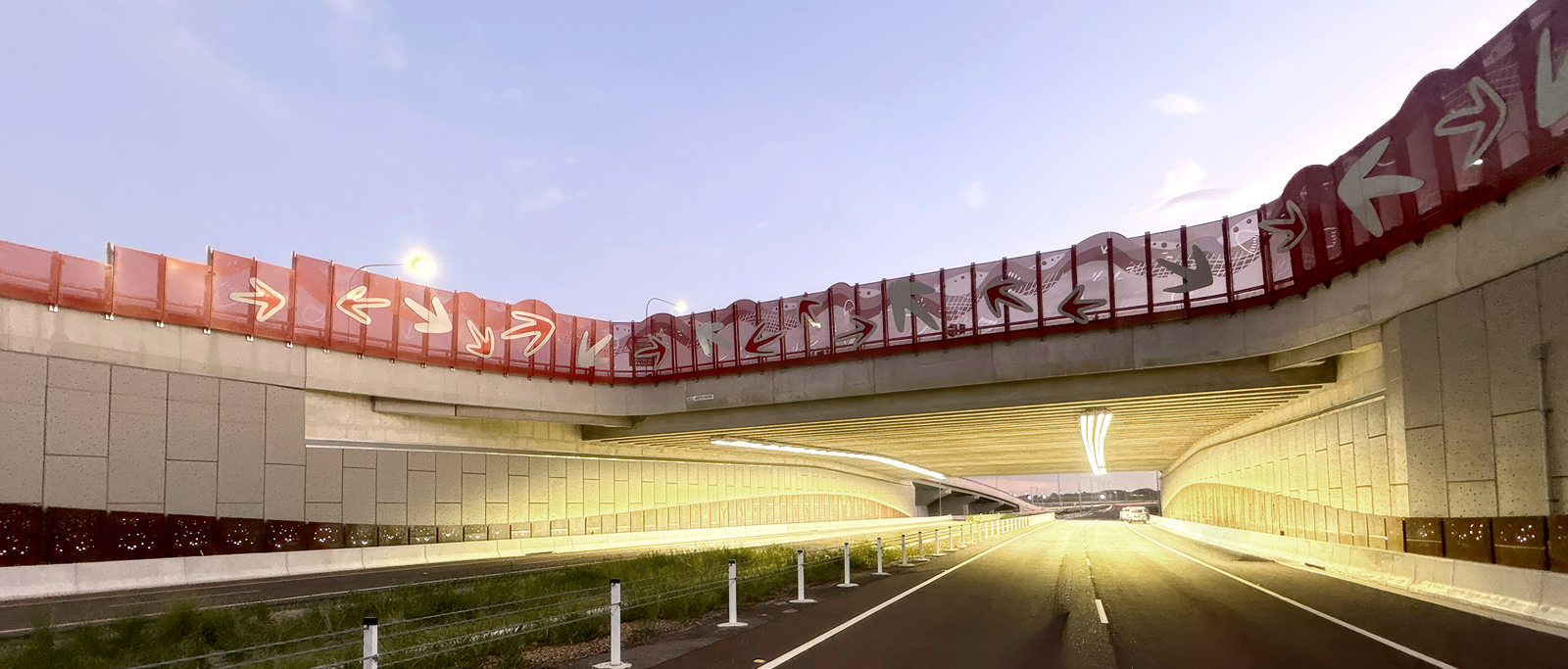
Featured on the safety screens of the six overbridges along the M12 Motorway are large scale reflective artworks that depict a seasonal Dharug story of the emu, including the Mariong Creation story. Created in co-design by Balarinji Studio with locally-connected Aboriginal artists.


Creation story: Mariong is sitting in the river, she stands up, shakes the water off her feathers and creates the stars that became the Milky Way.

Mariong chases the male emu
Male emu sits on the nest
Ceremony time: chicks start to hatch
Sitting in the waterholes
The Dry

Eucalypt Canopies

Co-designed by Balarinji Studio with Aboriginal artists Barry Gunther, Jamie Eastwood and Jasmine Seymour.

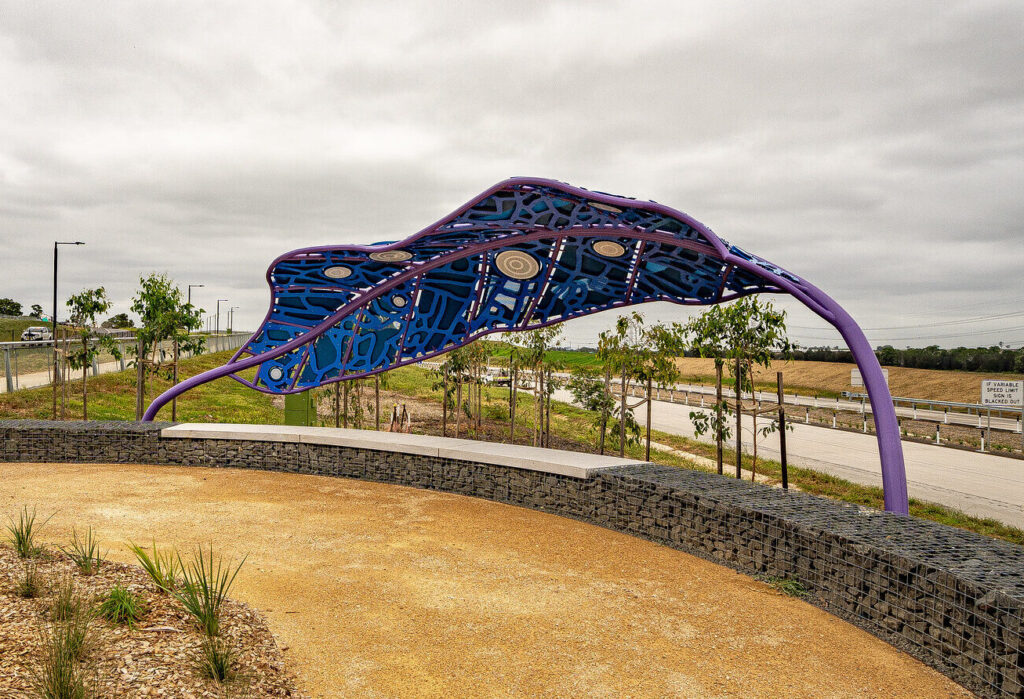
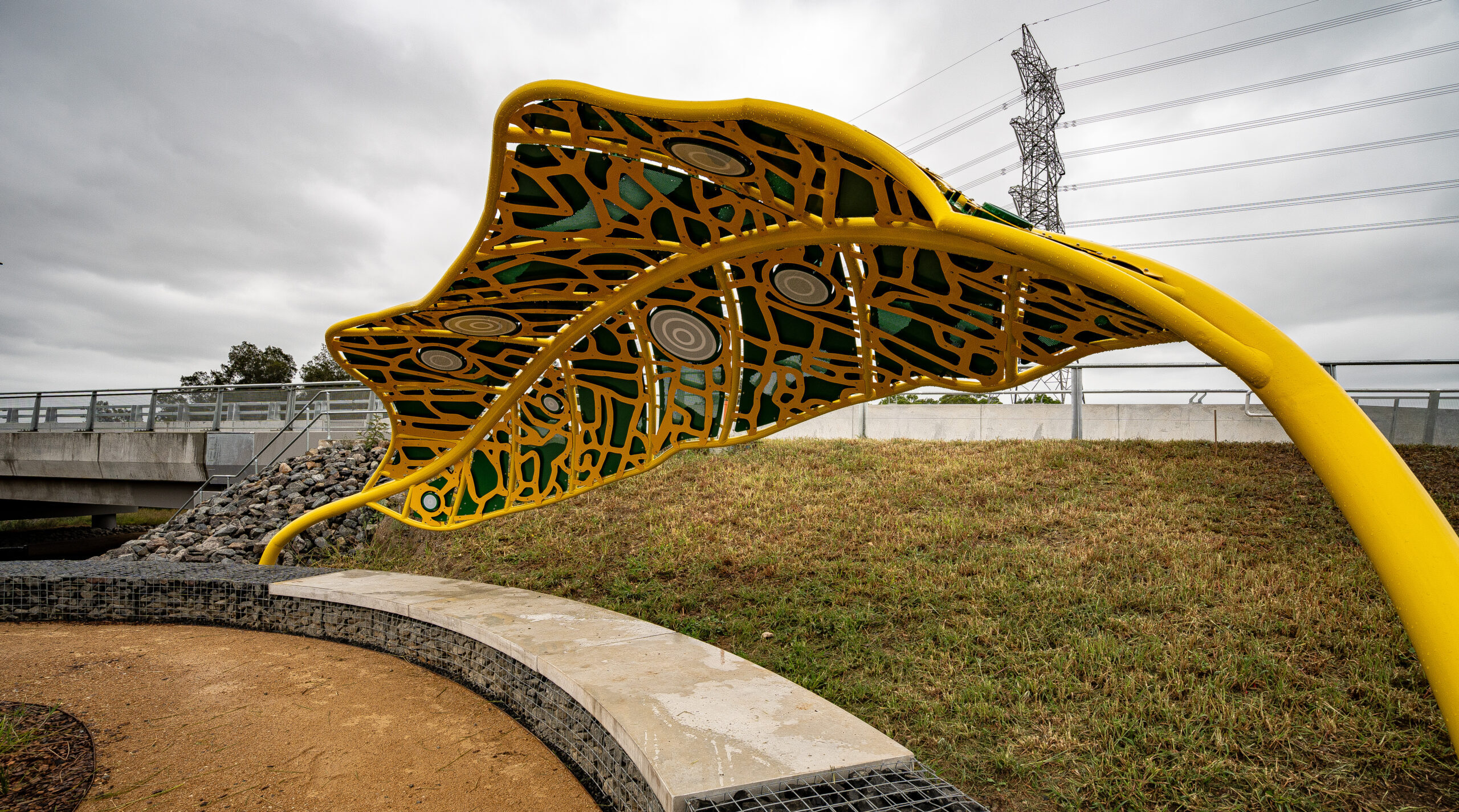
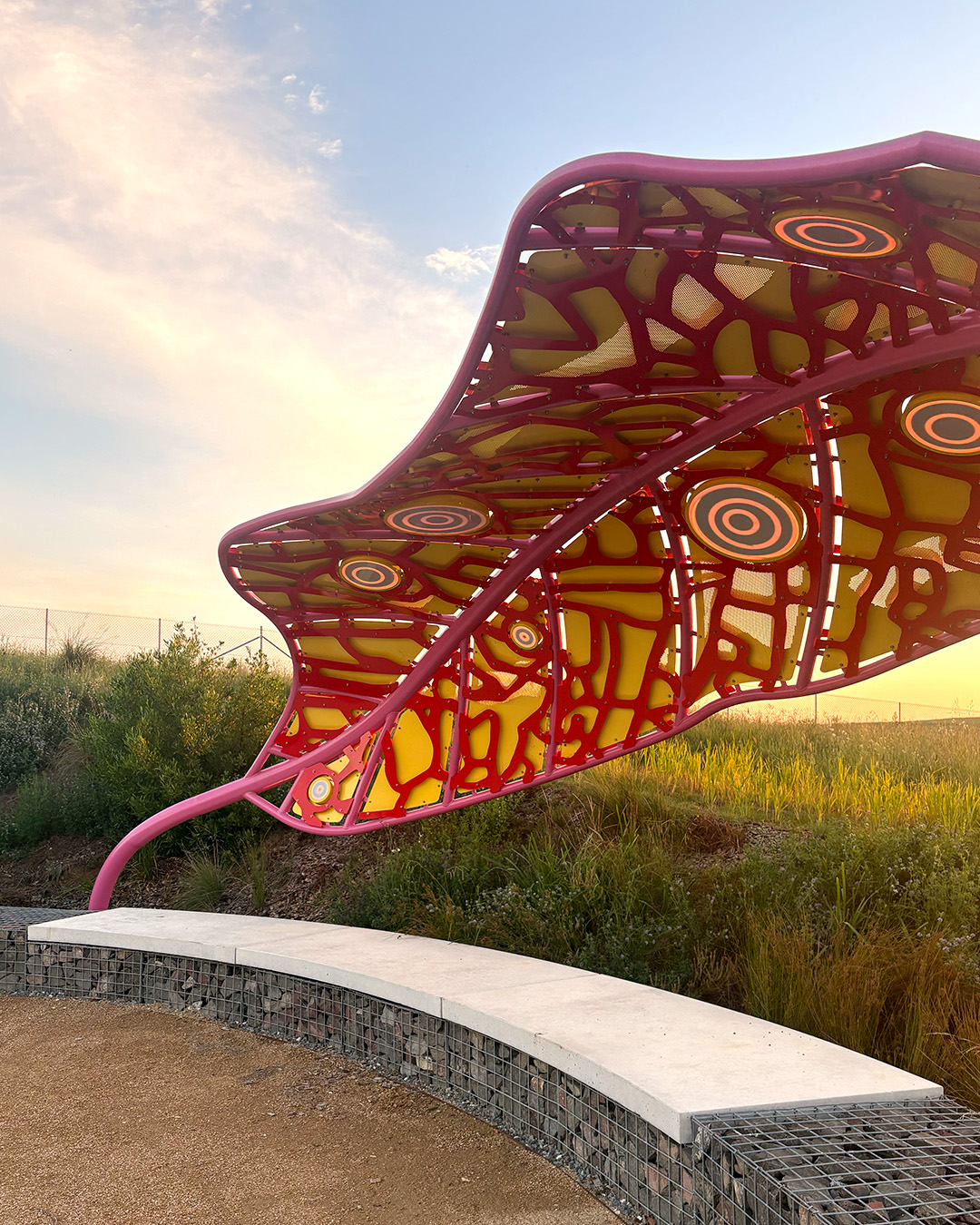
The Eucalypt Canopy installations highlight the Aboriginal Six Seasons of Western Sydney through their tri-colour patterns. These installations invite travellers to experience the patterns and textures of the natural environment that is all around, if we pay attention and listen to Country.

The concept of scale of the Eucalypt Canopy installations with people using the shared path has been inverted. By changing the scale to an oversized eucalyptus leaf, the user becomes part of the environment with a different lens through which to experience the intricate detail of Country.


There are three large leaf canopies, one at each entry point to the shared path, offering shade and lit at night, which act as welcome to Country landmarks, further expressing the themes of Aboriginal protocols and Interconnectedness. The third is  located near the creek lines to acknowledge the importance of creeks and water systems within Aboriginal community and culture, particularly Wiannmatta – Mother Place (South Creek).

There are six smaller leaf canopies, one at each rest node along the shared path, representing each of the Western Sydney Aboriginal six seasons.

Integrated Wall Elements

The major retaining walls located along Elizabeth Drive and the Airport Interchange complement the nearby artworks.

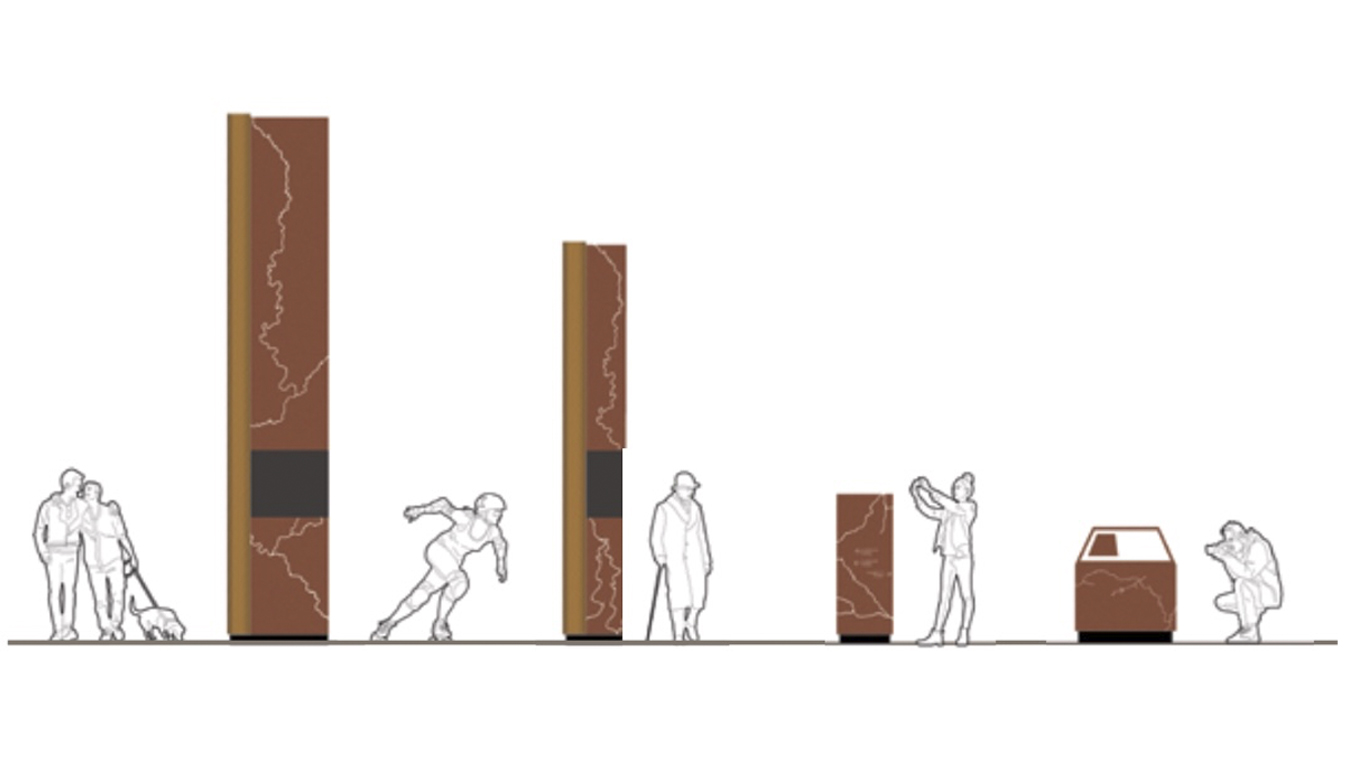
The walls reference the Emu constellation through the use of a subtle constellation relief within the Reinforced Soil Walls. Undulating perforated weathering steel panelling is affixed to the face of the walls of Elizabeth Drive interchange and incorporates local Dharug language and a continuation of the constellation motif.

Wayfinding

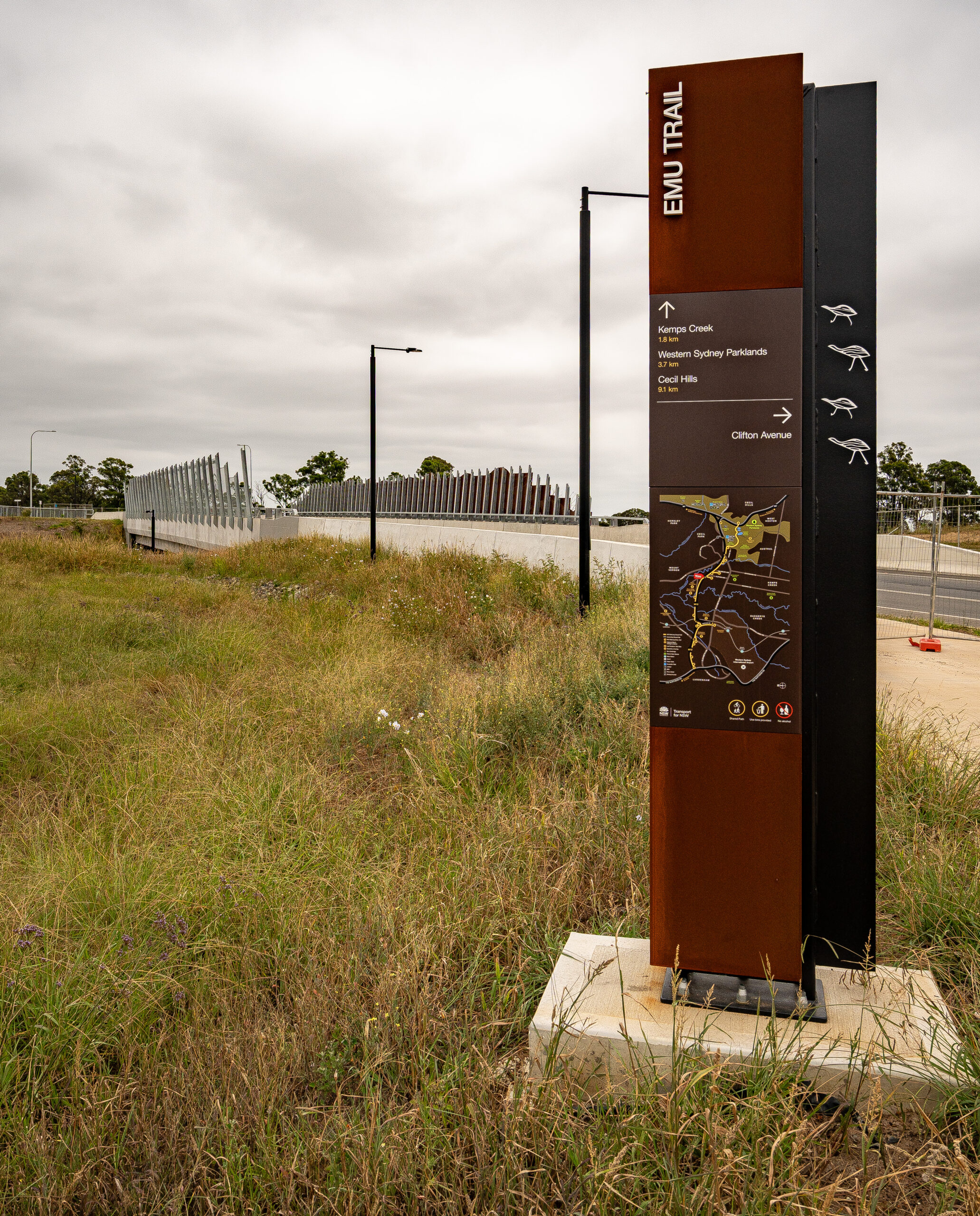
Balarinji Studio designed the approach to wayfinding to reflect the unique and distinctive identity of local Aboriginal stories and heritage in the M12 Motorway’s signage.

Aboriginal Artist and Community Knowledge Holder Cohort

Danny Eastwood (Ngemba)
Jamie Eastwood (Ngemba/Dharug)
Barry Gunther (Gandangara)
Danielle Mate (Murrawarri/Euahlayi)
Jasmine Seymour (Dharug)
Leanne Watson (Dharug)
Frances Bodkin (D’harawal)
Julie Jones (Dharug)
Corina Norman (Dharug – Warmuli/Cannemegal)
Balarinji Design Studio, including The Great Emu in the Sky lead conceptual artist on the work’s genesis, Tim Moriarty (Yanyuwa)